
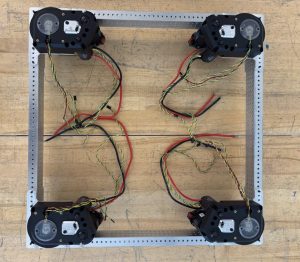
With the introduction of the new SDS MK5n swerve modules, we decided to build a 26.5 x 26.5 (our team’s preferred frame perimeter) drivetrain during the fall season. We wanted to make sure there would be no surprises during the build season, and we also wanted the opportunity to work on a new layout of upside-down belly (brain) pan.
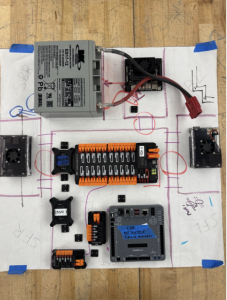
We spent a lot of time and energy planning out the layout of all our control system components on the brain pan. We worked out how the wires would route inside the brain pan and how to implement strain relief on key connections. We also planned out the CAN bus, and decided to implement two CANivores to isolate the drivetrain devices and the subsystem devices. We will also be using jacketed CAN wire whenever possible, black for drivetrain, grey for all sub systems above the drivetrain, we believe different jacket colors will help with serviceability and troubleshooting. We decided to use Refire quick connect adapters (Anderson and Molex SL connector option) on our Krakens to simplify wiring, improve serviceability and troubleshooting. This also allows us to implement direct runs on the CAN bus, reducing the number of connections, which typically are points of failure. The goal is also to isolate and keep all drivetrain power, and can wires within the “protected zone” of the brain pan, with the exception of the Pigeon, which is located above the brain pan. We believe this will allow for improved serviceability.
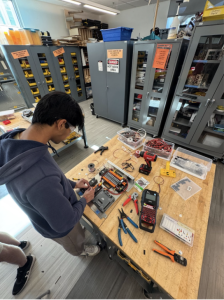
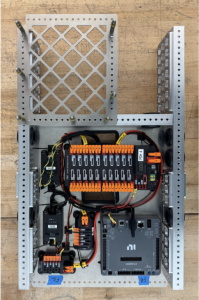
With reliability, serviceability and improved troubleshooting a focus the upcoming season, we faced some struggles with the CANcoder’s wire pathing from the SDS 5Kn swerve modules down to the Refire quick connect adapters. Using the Refire quick connect adapter to power the CANcoder creates a branch leg on the CAN bus. We also had some issues with the wires getting in the way of a couple of drivetrain plates that were CAD’ed without accounting for our planned wire pathing. However, a quick redesign of the plates and a CNC router run allowed us to address the issue and move on. The initial motor and drive rail frame assembly went smoothly.
However, when it came to adding on the brain pan, and side plates which will house our vision processors, and polycarb protector, we discovered a lot of issues with tolerancing and unplanned interferences. The lesson for everyone on the team; more cross team communication is needed, and better design reviews involving the control systems and drivetrain design teams.
We first discovered that the side plates interfered with the motors, preventing them from fitting into place. The cause was due to a discrepancy between the motors position (rotation) in the CAD and the rotation of the motors on the robot. The motors on the robot contained an extra component, a Refire quick connect assembly to facilitate improved wire pathing, which was not shown on the CAD. To fix the interference, we had to go back into the CAD and update the motors in order to alter the side plates and ensure they fit on the next iteration. When the second iteration of the side plates was manufactured, we came to the unfortunate realization that once again, there were interference issues, this time with the power wires coming from the Refire quick connect adapters. We once again had to redesign the side plates, resulting in further project delays, and burning through more aluminum.
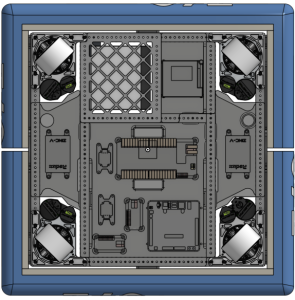
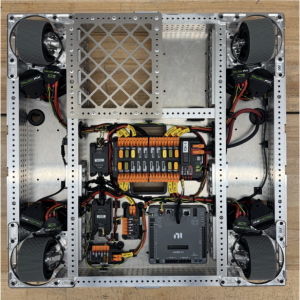
After finally perfecting the side plates and assembling them onto the robot, we discovered that when adding the polycarbonate bottom plate, it didn’t fit into the planned pocket because of the very minimal tolerancing with which it was designed. Any deviation accrued while assembling the drivetrain led to its inability to mesh into place. To fix this issue, we again went back into the CAD and redesigned the plate to have a greater tolerance on each edge, providing a degree of leniency when assembling it onto the drivetrain. Fortunately, it fit with only one redesign.
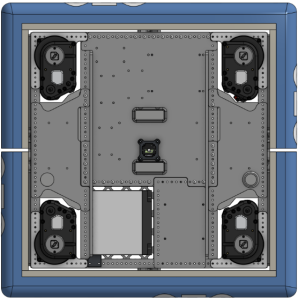
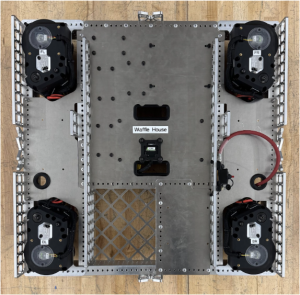
We also designed a new mounting system for all subsystems above the brain pan. The goal is to use these “waffle” mounting plates as a standard subsystem interface to improve serviceability no matter the subsystem.
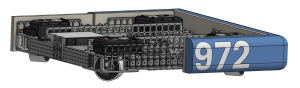
If you are interested in taking inspiration from our new MK5n drivetrain and control system board layout design, we will be publishing our CAD ahead of the Rebuilt Kick-off.