
By |2025-12-21T19:36:01-08:00December 19th, 2025|

This offseason, we decided to build a robot to play a modified version of the 2020 FRC game, Infinite Recharge. We wanted to get more experience building robust linkage intakes and have a chance for the programming team to tune an adjustable-hood ball shooter. The robot’s subsystems (intake and shooter) were primarily designed by first and second-year students, with minimal input and guidance from the upperclassmen, and were designed to be mounted on our new MK5n swerve drivetrain, with a redesigned control system board, and a new “waffle” mounting plate system that was lead by upperclassmen. The goal is to use these “waffle” mounting plates as a standard subsystem interface to improve serviceability no matter the subsystem. You can check out the MK5n Drivetrain blog here.  We’re proud of the work that they were able to accomplish and believe that this training has better prepared the entire team for the upcoming build season and competition season. Partially inspired by 1678’s 2022 and 2020 robots - “Steal from the Best, Invent the Rest”, we de-scoped the game and decided to focus on what would teach us the most while being able to be built in the least amount of time. For example, we decided to only store one [...]
By |2025-12-20T17:58:31-08:00December 19th, 2025|

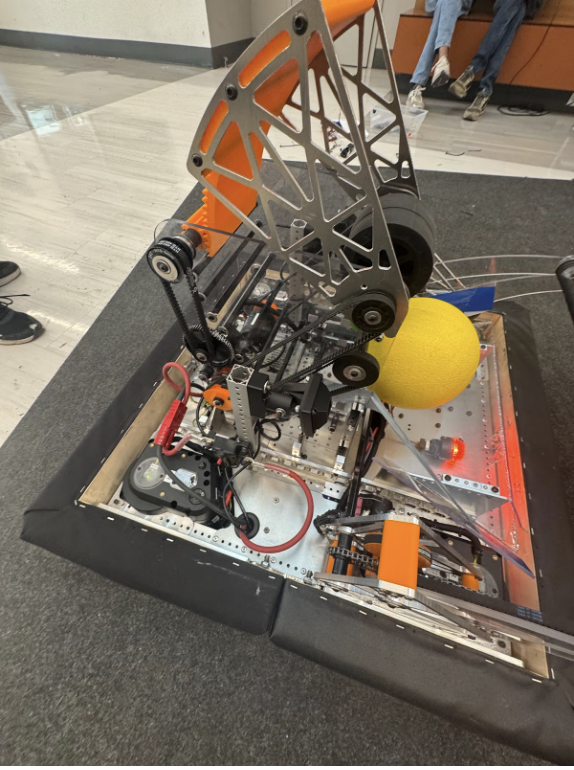
The project began in mid-September with the basics: laying out the geometry for motors, pulleys, belts, and gears while staying within frame perimeter constraints. Early work focused on plate layouts and making sure there was enough space to mount hardware without interfering with the belt runs. By late September, we finished the hood plate and met my first real challenge: problems with gear meshing. This would become an ongoing theme. In early October, after some research on Citrus Circuits' shooter design, we had made the ambitious move to try and copy their gear by hand. This. did not go well. We learned quickly that precision gear geometry is not something you "eyeball." October brought a major breakthrough in using GearLabs and a Kraken gear profile to make a reliable mesh. The lesson was reinforced in all caps: DO NOT EYE BALL OR HAND MAKE GEARS. Once appropriate gear geometry was in place, we could proceed to complete the 3D printed part studio and further refine the geometry. By mid October, talking to mentors and running calculations through ReCalc showed us that we had drastically underestimated RPM requirements for the shooter design. In other words, it was time for a change—big changes. We revised the 3D printed hood to decrease the minimum angle [...]

By |2025-12-20T18:04:41-08:00December 19th, 2025|

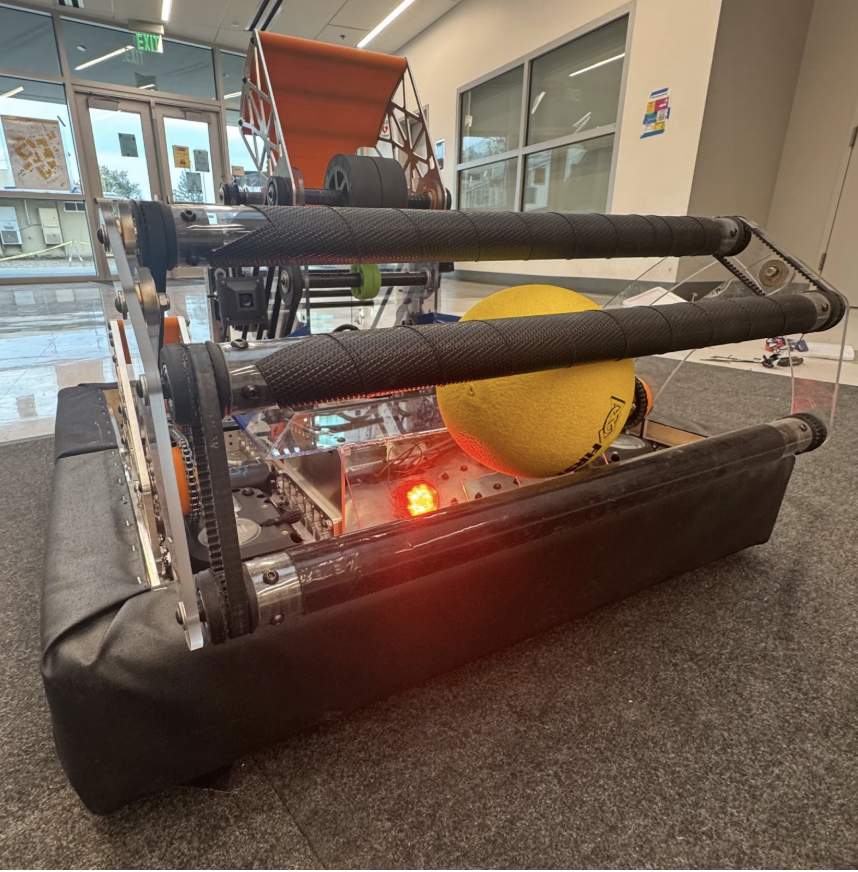
The project began at the beginning of September. We started by deciding which motors we would use and the necessary gear ratios for each mechanism. Once we decided that, we made rough sketches of the gear and motor layouts for the rollers and the pivot mechanism. While designing the intake, the geometry of the intake up and down positions constantly made it challenging for us to design a good mechanism. We had to change parts of the master sketch very often, and it is important to know which parts you should and shouldn’t change. For example, changing the pivot points of the intake or the height of the stowed position would be fine, since the intake would work mostly the same. However, changing the down position might prevent the intake from effectively intaking since its position relative to the ball could be incorrect. Also, changing the horizontal position of the up position might make the robot reach over its frame perimeter. We decided to try stub rollers on this intake. Initially, we decided that the stub rollers would be mounted by putting them against the joint of the polycarb plates. However, we realized that the little surface area of contact between the stub roller and the arm could make the rollers [...]

By |2025-12-20T18:05:30-08:00December 19th, 2025|

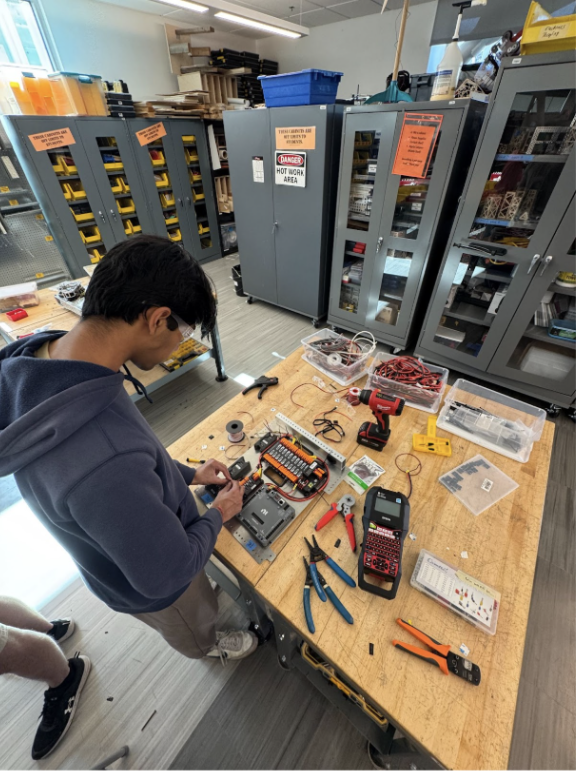
With the introduction of the new SDS MK5n swerve modules, we decided to build a 26.5 x 26.5 (our team’s preferred frame perimeter) drivetrain during the fall season. We wanted to make sure there would be no surprises during the build season, and we also wanted the opportunity to work on a new layout of upside-down belly (brain) pan. We spent a lot of time and energy planning out the layout of all our control system components on the brain pan. We worked out how the wires would route inside the brain pan and how to implement strain relief on key connections. We also planned out the CAN bus, and decided to implement two CANivores to isolate the drivetrain devices and the subsystem devices. We will also be using jacketed CAN wire whenever possible, black for drivetrain, grey for all sub systems above the drivetrain, we believe different jacket colors will help with serviceability and troubleshooting. We decided to use Refire quick connect adapters (Anderson and Molex SL connector option) on our Krakens to simplify wiring, improve serviceability and troubleshooting. This also allows us to implement direct runs on the CAN bus, reducing the number of connections, which typically are points of failure. The goal is also to isolate and keep all drivetrain power, [...]

Go to Top