About Alejandro Chavez Sermeno

This author has not yet filled in any details.
So far Alejandro Chavez Sermeno has created 1 blog entries.

By |2026-02-24T15:35:20-08:00February 23rd, 2026|

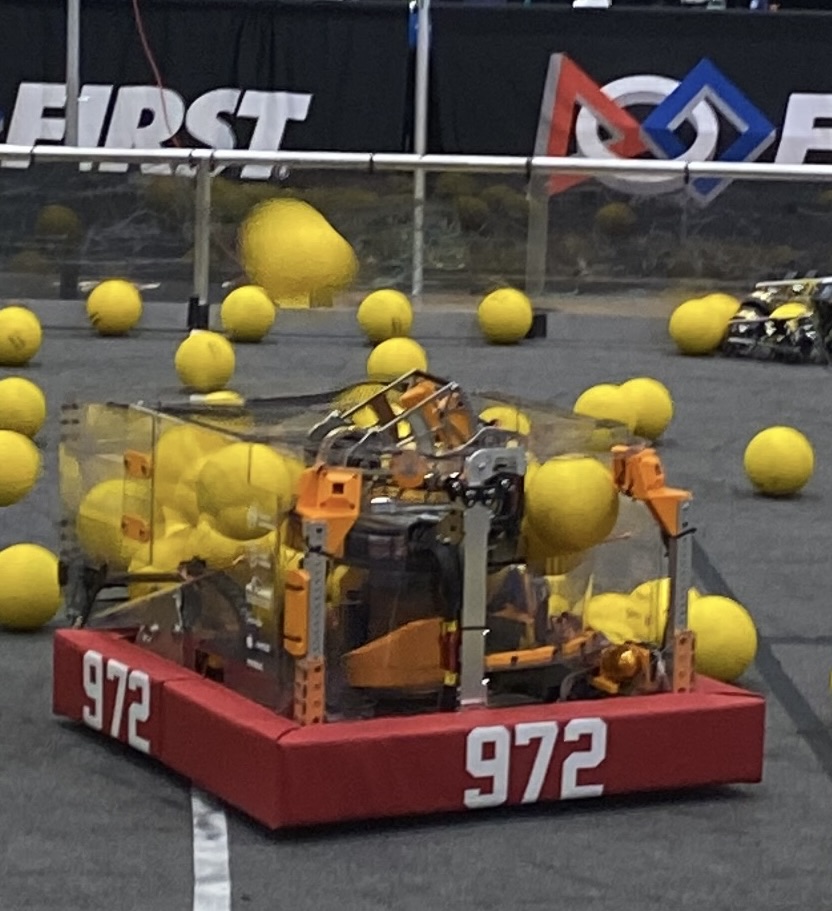
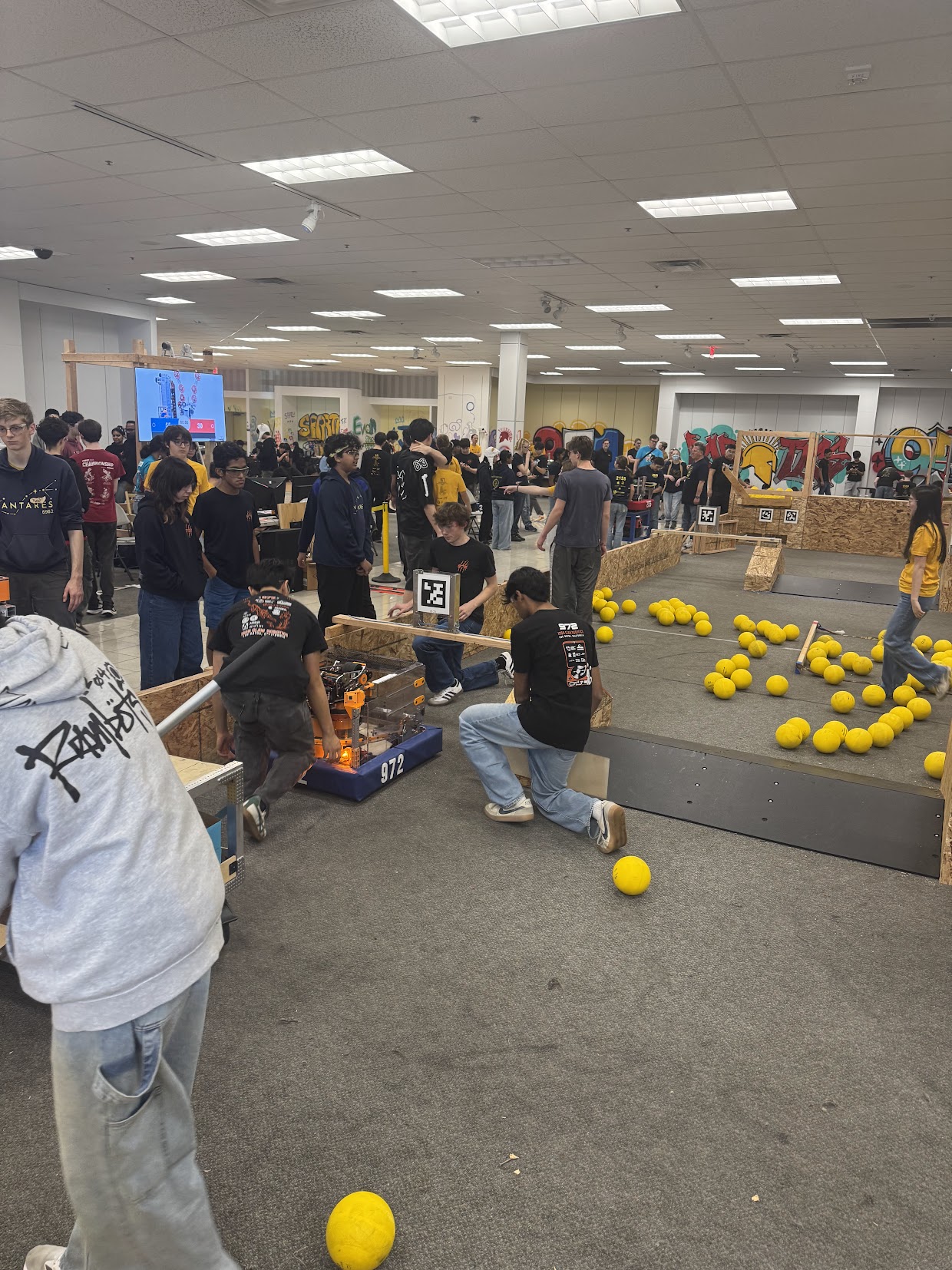
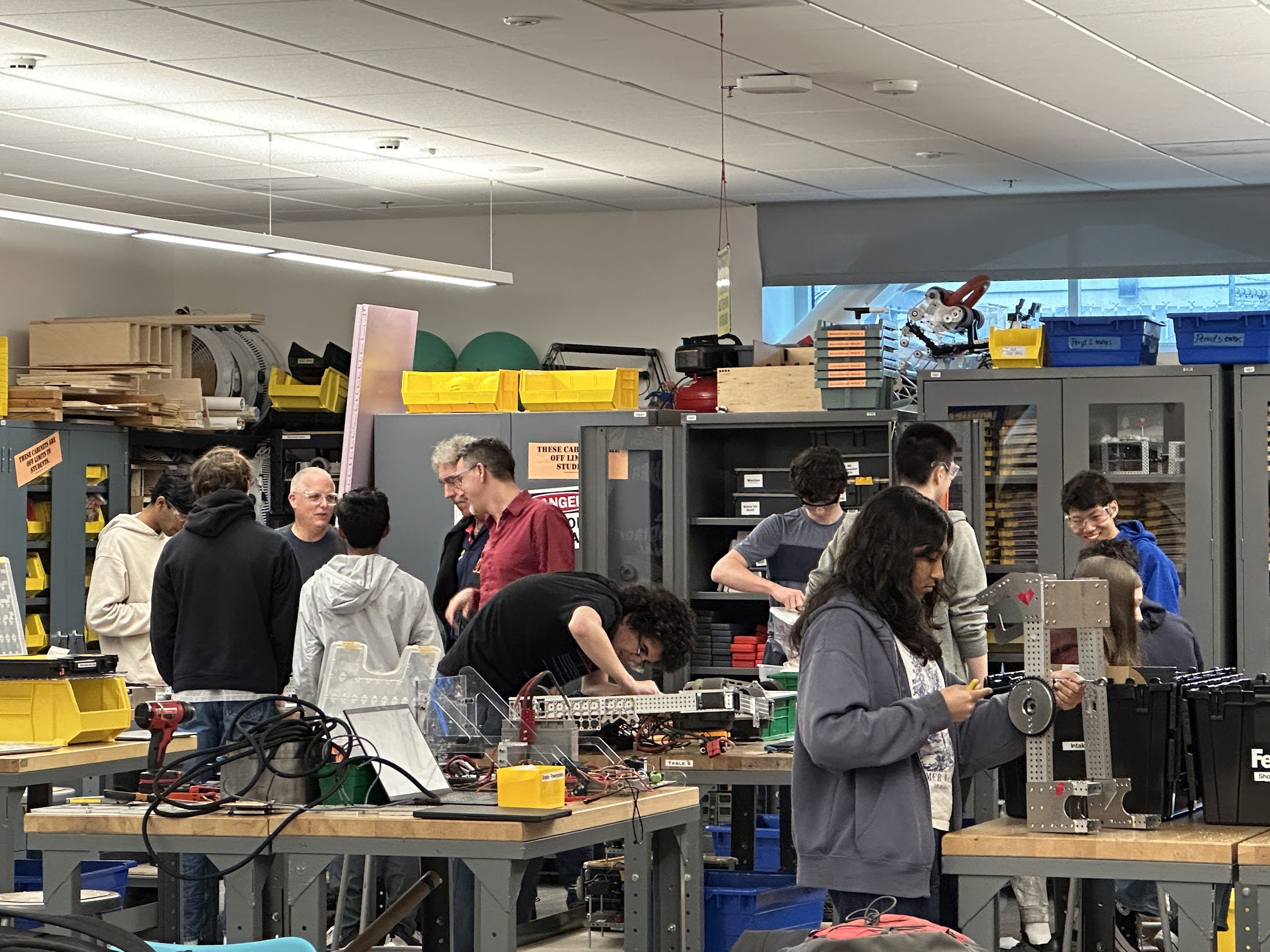
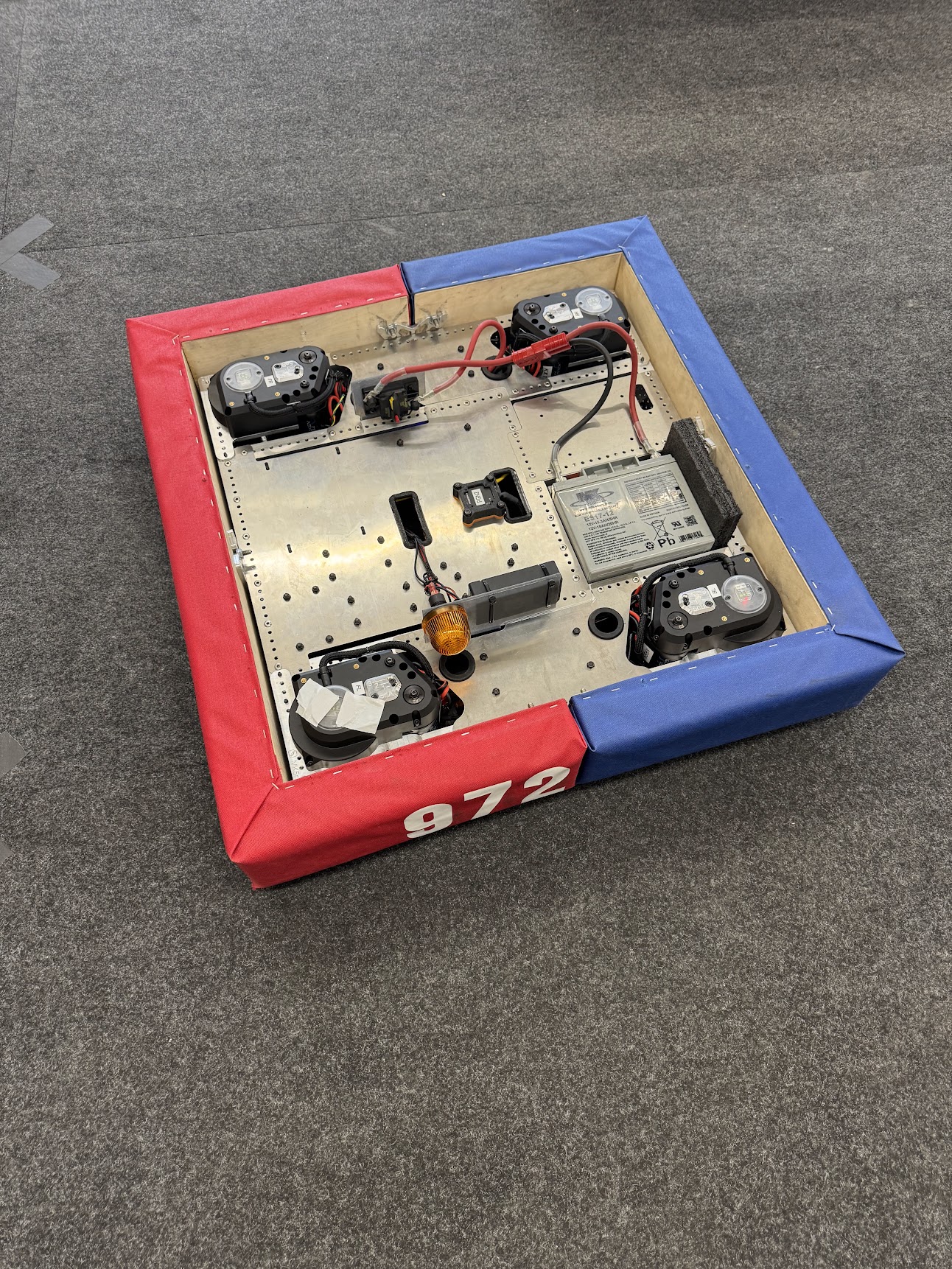
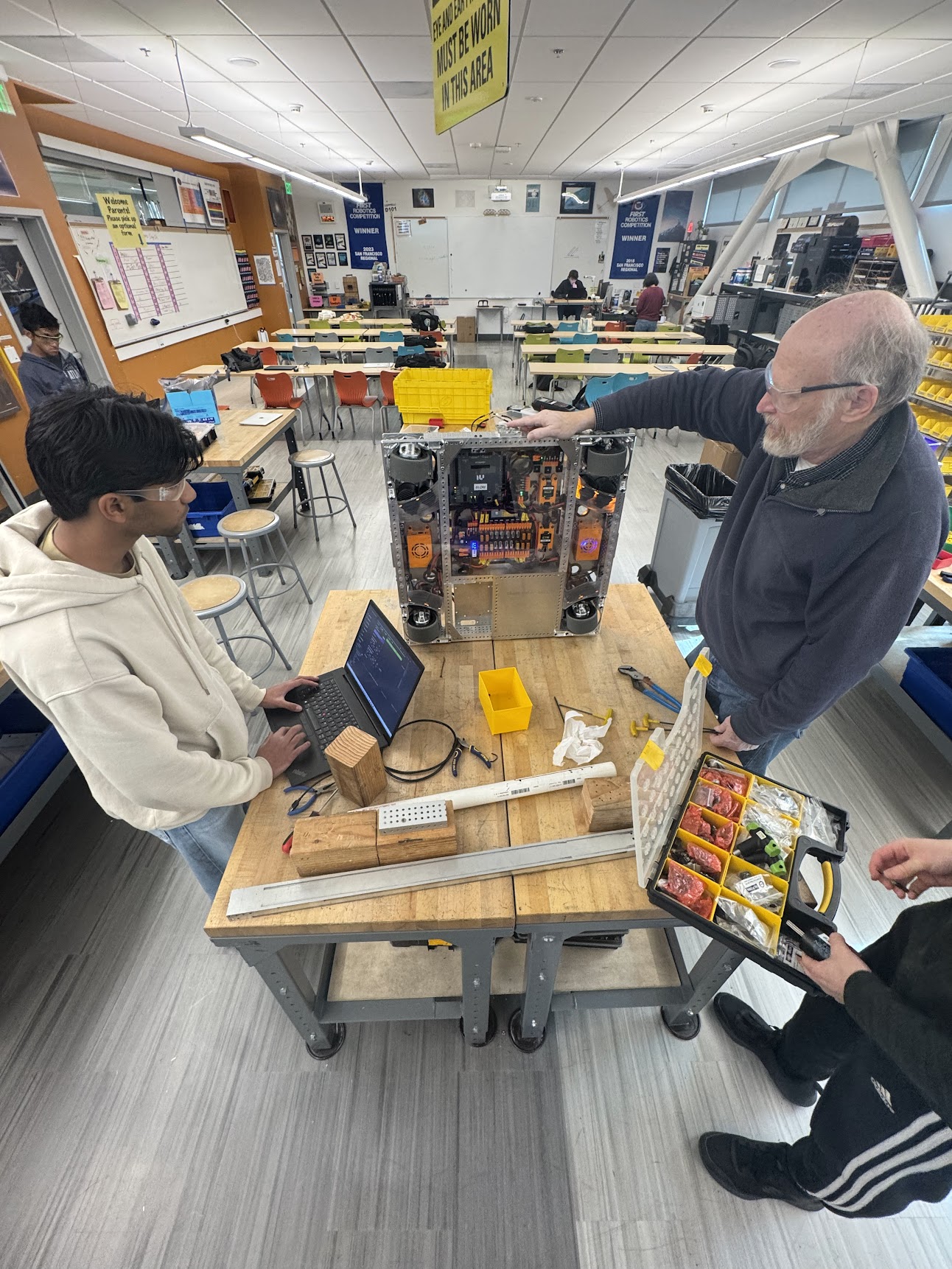
Convergence: Build Week 5 & 6, which spans work days 21 to 30 for our team, is the time of convergence. The drivetrain and Control System Board (CSB) were completed by Work Day 12. The software groups worked on code to validate what would be required for each of their respective subsystems. The various CAD groups turned prototypes into real subsystems, going through many preliminary design reviews (PDRs), iterations, and then final critical design reviews (CDRs). The Spindexer (dye-rotor), floor, and racetrack required some extra time to finalize their designs. During this time, the manufacturing group started to manufacture subsystems that cleared their CDR phase, our 3D printers have been working overtime as well. Subsystems assembly teams have been very busy. Our three robot driver candidates continued to practice with our prior-season robots to become familiar with optimal drive paths within the Alliance and Neutral zones, traversing the bump, and going under the trench. Intake and Store: Assembly work was completed on the intake and store. The Control Systems team completed all the wiring. We moved the robot to the field to validate the end to end operation by running several tests. Our robot driver was able to test acquisition of game pieces running at various speeds while the intake and store hardware [...]

By |2026-02-10T15:32:36-08:00February 10th, 2026|

Prototyping Climb Decision: Telescoping arm - After weight and packaging considerations by the team at large, we made a DVC decision to redistribute the workforce of the windmill climb to the telescoping climb. The windmill design added extra structure and instability, which increased weight and made integration more difficult. The telescoping climb offered a more compact and straightforward solution that fit better with the rest of the robot. Refocusing the workforce allowed the team to improve reliability and spend more time testing and refining the final climb system.   Intake & Store: This week, we have been finalizing the wire management of the intake motor, as well as the mounting for the back wall of the hopper. We decided to use 3M Dual Lock to attach the back wall to the side walls, so it’s easier to access the battery and service other mechanisms above the drivetrain. We also decided to bend the back wall around our climb rather than go around it to make it easier to attach and detach. Spindexer: The CAD and design of the dye rotor were adjusted throughout the week. We were able to make a lot of progress CAD-wise, and we began manufacturing the hex shaft and [...]

By |2026-02-11T16:59:59-08:00February 2nd, 2026|

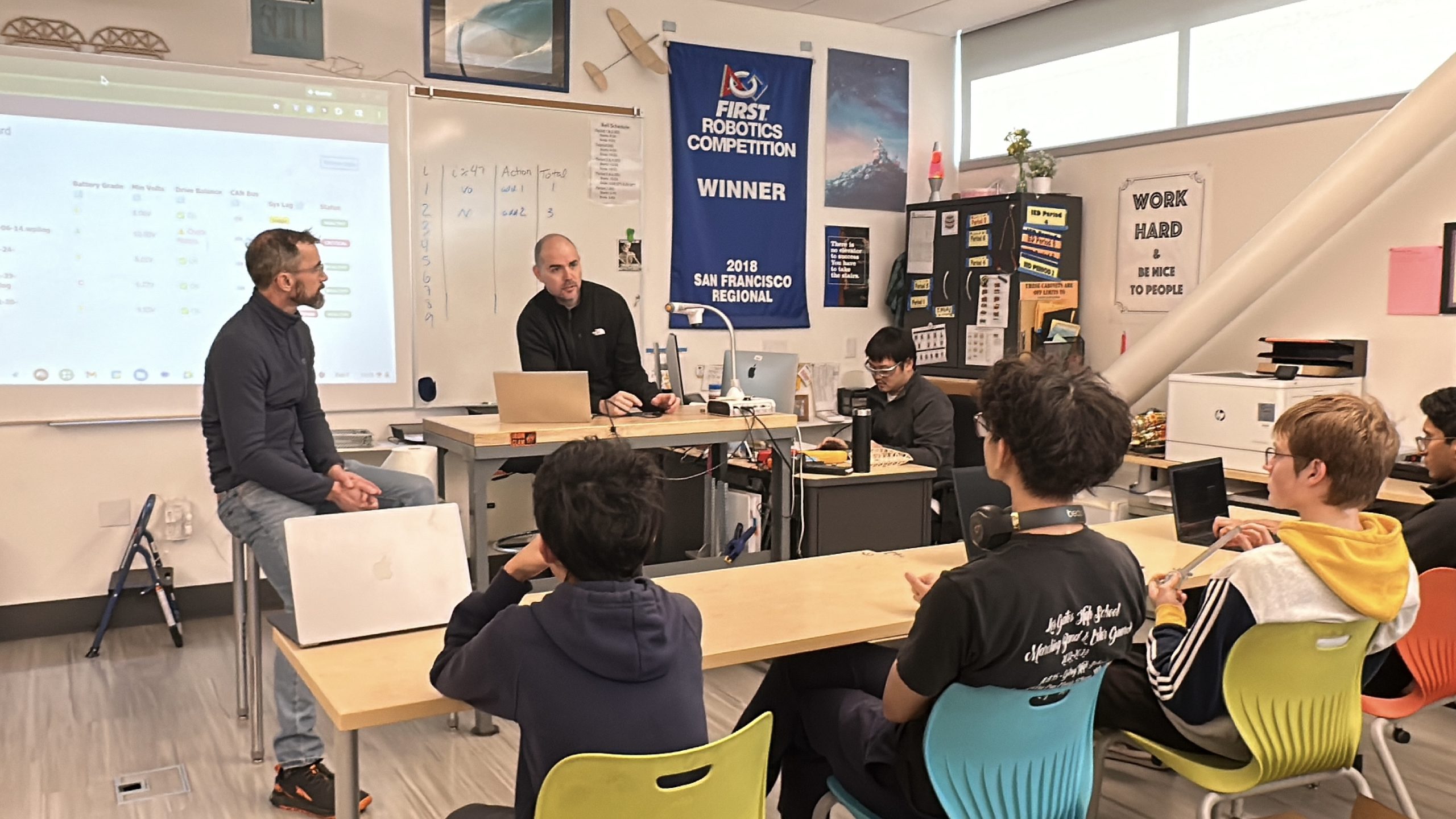
At the start of build week three, our Decision Voting Committee (DVC) made some important decisions regarding what mechanism had conceptually demonstrated the ability from a hardware and software point of view to support our functional requirements & strategy, and what mechanism would be given an additional week of prototyping time. Our Intake and Store, Spindexer, and Turreted Shooter were approved for our competition robot. Our two climb prototypes were given another week to finalize their prototypes. Intake & Store: Over the past week, our team has been completing the intake CAD. We decided to do a linear intake with an extendable hopper on top of it, so it can store more balls. For this design, we made the hopper extend horizontally while the intaking mechanism extends at an angle, allowing us to have a higher capacity while still fitting under the trench, even when the intake is stowed. We are now finalizing our mounting system, which will allow our manufacturing team to get to work. Spindexer: With the decision to move forward with the spindexer our cadders started working on the CAD for a more complete design based off of our prototype to be integrated with other subsystems. We are taking inspiration from the 111 [...]

By |2026-01-27T10:22:20-08:00January 26th, 2026|

Build Week 2 was a hive of activity with 5 groups focused on prototyping, while a sixth group worked on our Alpha Bot. A final group of students focused on delivering a competition drivetrain (DT) and control system board (CSB) by Work Day 12.  We mounted a turret onto a spare drivetrain with a hoodless shooter. Using two cameras, vision allowed us to calculate the turret’s position in order to score in the hub. We successfully compensated for robot movement by providing shooting on the move (SOTM) and intend to further tune it, then experiment with a real hood. We tested a design for linear climb using three sets of hooks, which let us get an L1 climb, but for L2 and L3, we encountered some issues with the hooks not reaching and the tilt of the robot. Our hooks are spring-loaded, which allows them to go from below the rung. We are pivoting the design to a fast L1 climb, as L3 will likely not be point efficient. We tested our prototype v2 of the windmill climb, and with some human assistance, we got an L1, L2, and almost an L3. We had some issues with the auxiliary arm getting caught on the [...]

By |2026-01-24T11:12:20-08:00January 24th, 2026|

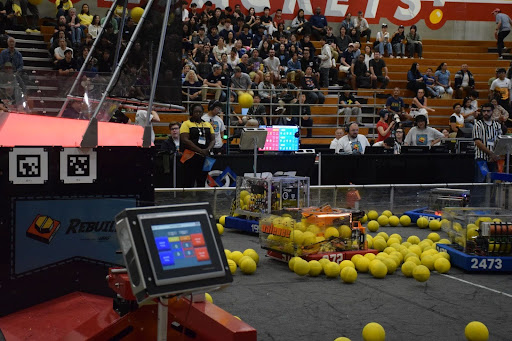
On kickoff day, our team immediately dissected every aspect of the new 2026 FRC game, “Rebuilt.” We constantly reviewed the field layout and put ourselves in the minds of the game designers to reverse-engineer strategy. Our team reviewed the manual for hours, and we broke out into groups to discuss our thoughts on certain rules. Coordinating as a team again, we compiled our thoughts about the manual and then quizzed ourselves to truly master the game. With the game’s dimensions, regulations, and facets in mind, we started to strategize using previous lessons from our mentors’ presentations. We organized our functional requirements into four categories: shall have, expected, could have, and shan't have. Once we finalized our robot’s functional requirements and expectations, we tackled our strategy for the game. This consisted of numerous pitches from our breakout group expressing what they thought was the best strategy for this game. We discussed whether we should utilize the trench by making our robot short, the possibility of stealing the fuel from the opponents, the benefits and downsides to using the human player, and how high we would want to climb the ladder. Once we started our prototyping days, it was clear what we would want to see on a robot. [...]

Go to Top