About Kaushik Tadepalli

This author has not yet filled in any details.
So far Kaushik Tadepalli has created 6 blog entries.

By |2026-02-24T15:35:20-08:00February 23rd, 2026|

Convergence: Build Week 5 & 6, which spans work days 21 to 30 for our team, is the time of convergence. The drivetrain and Control System Board (CSB) were completed by Work Day 12. The software groups worked on code to validate what would be required for each of their respective subsystems. The various CAD groups turned prototypes into real subsystems, going through many preliminary design reviews (PDRs), iterations, and then final critical design reviews (CDRs). The Spindexer (dye-rotor), floor, and racetrack required some extra time to finalize their designs. During this time, the manufacturing group started to manufacture subsystems that cleared their CDR phase, our 3D printers have been working overtime as well. Subsystems assembly teams have been very busy. Our three robot driver candidates continued to practice with our prior-season robots to become familiar with optimal drive paths within the Alliance and Neutral zones, traversing the bump, and going under the trench. Intake and Store: Assembly work was completed on the intake and store. The Control Systems team completed all the wiring. We moved the robot to the field to validate the end to end operation by running several tests. Our robot driver was able to test acquisition of game pieces running at various speeds while the intake and store hardware [...]

By |2026-02-10T15:32:36-08:00February 10th, 2026|

Prototyping Climb Decision: Telescoping arm - After weight and packaging considerations by the team at large, we made a DVC decision to redistribute the workforce of the windmill climb to the telescoping climb. The windmill design added extra structure and instability, which increased weight and made integration more difficult. The telescoping climb offered a more compact and straightforward solution that fit better with the rest of the robot. Refocusing the workforce allowed the team to improve reliability and spend more time testing and refining the final climb system.   Intake & Store: This week, we have been finalizing the wire management of the intake motor, as well as the mounting for the back wall of the hopper. We decided to use 3M Dual Lock to attach the back wall to the side walls, so it’s easier to access the battery and service other mechanisms above the drivetrain. We also decided to bend the back wall around our climb rather than go around it to make it easier to attach and detach. Spindexer: The CAD and design of the dye rotor were adjusted throughout the week. We were able to make a lot of progress CAD-wise, and we began manufacturing the hex shaft and [...]

By |2026-02-11T16:59:59-08:00February 2nd, 2026|

At the start of build week three, our Decision Voting Committee (DVC) made some important decisions regarding what mechanism had conceptually demonstrated the ability from a hardware and software point of view to support our functional requirements & strategy, and what mechanism would be given an additional week of prototyping time. Our Intake and Store, Spindexer, and Turreted Shooter were approved for our competition robot. Our two climb prototypes were given another week to finalize their prototypes. Intake & Store: Over the past week, our team has been completing the intake CAD. We decided to do a linear intake with an extendable hopper on top of it, so it can store more balls. For this design, we made the hopper extend horizontally while the intaking mechanism extends at an angle, allowing us to have a higher capacity while still fitting under the trench, even when the intake is stowed. We are now finalizing our mounting system, which will allow our manufacturing team to get to work. Spindexer: With the decision to move forward with the spindexer our cadders started working on the CAD for a more complete design based off of our prototype to be integrated with other subsystems. We are taking inspiration from the 111 [...]

By |2025-12-21T19:36:01-08:00December 19th, 2025|

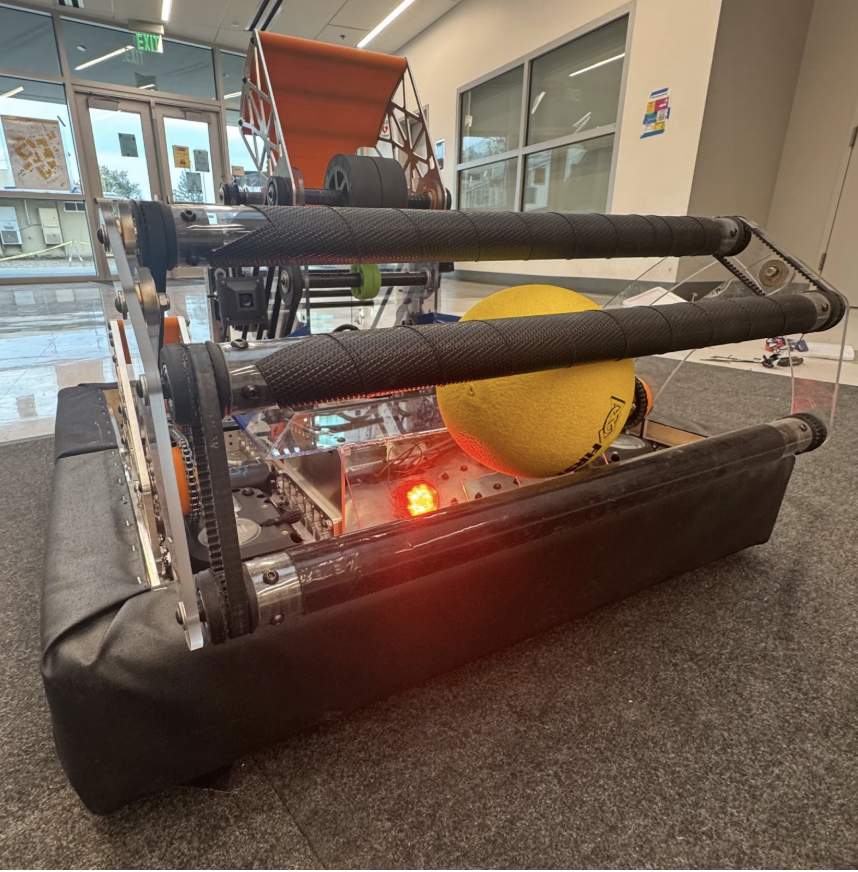
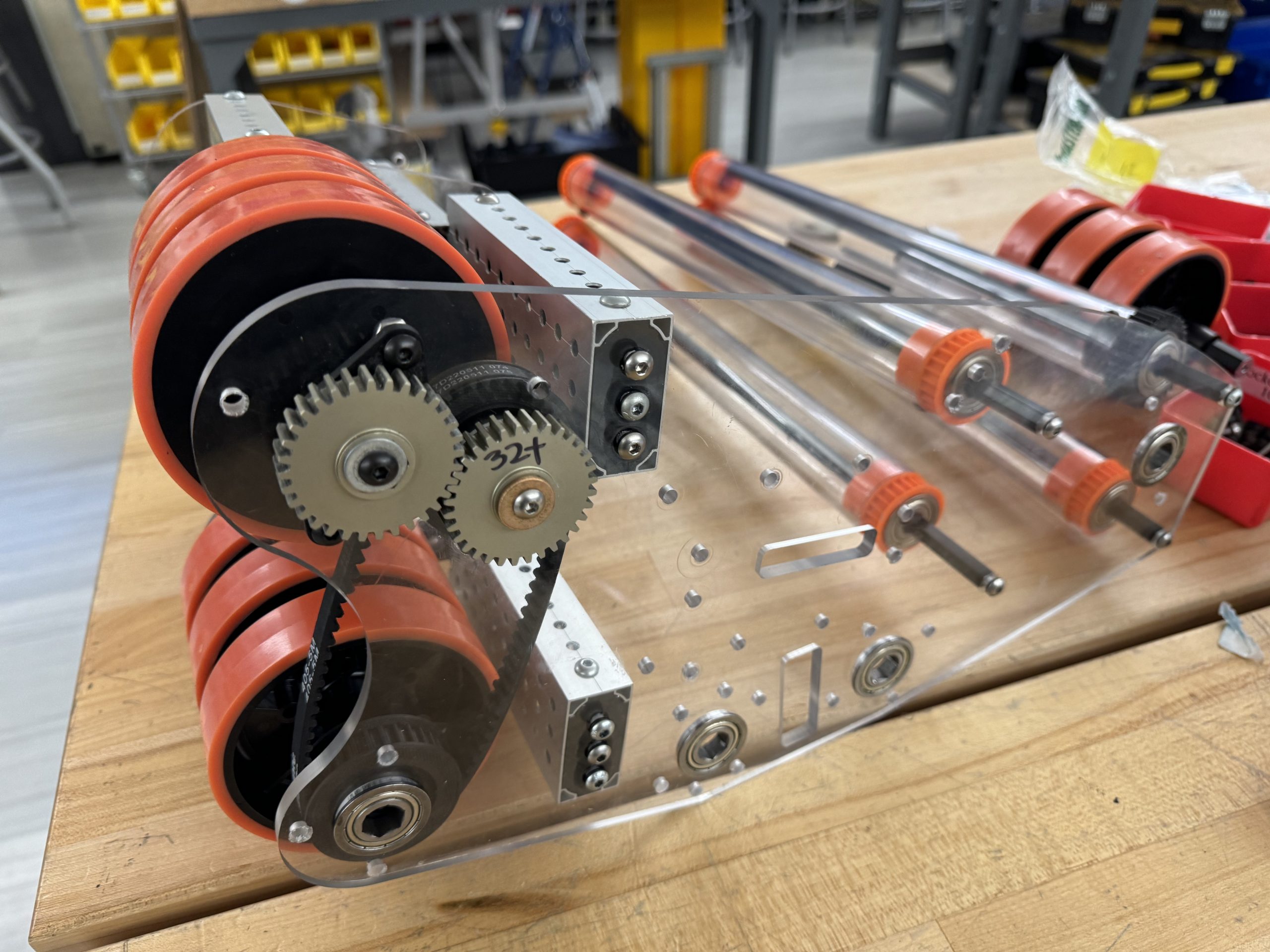
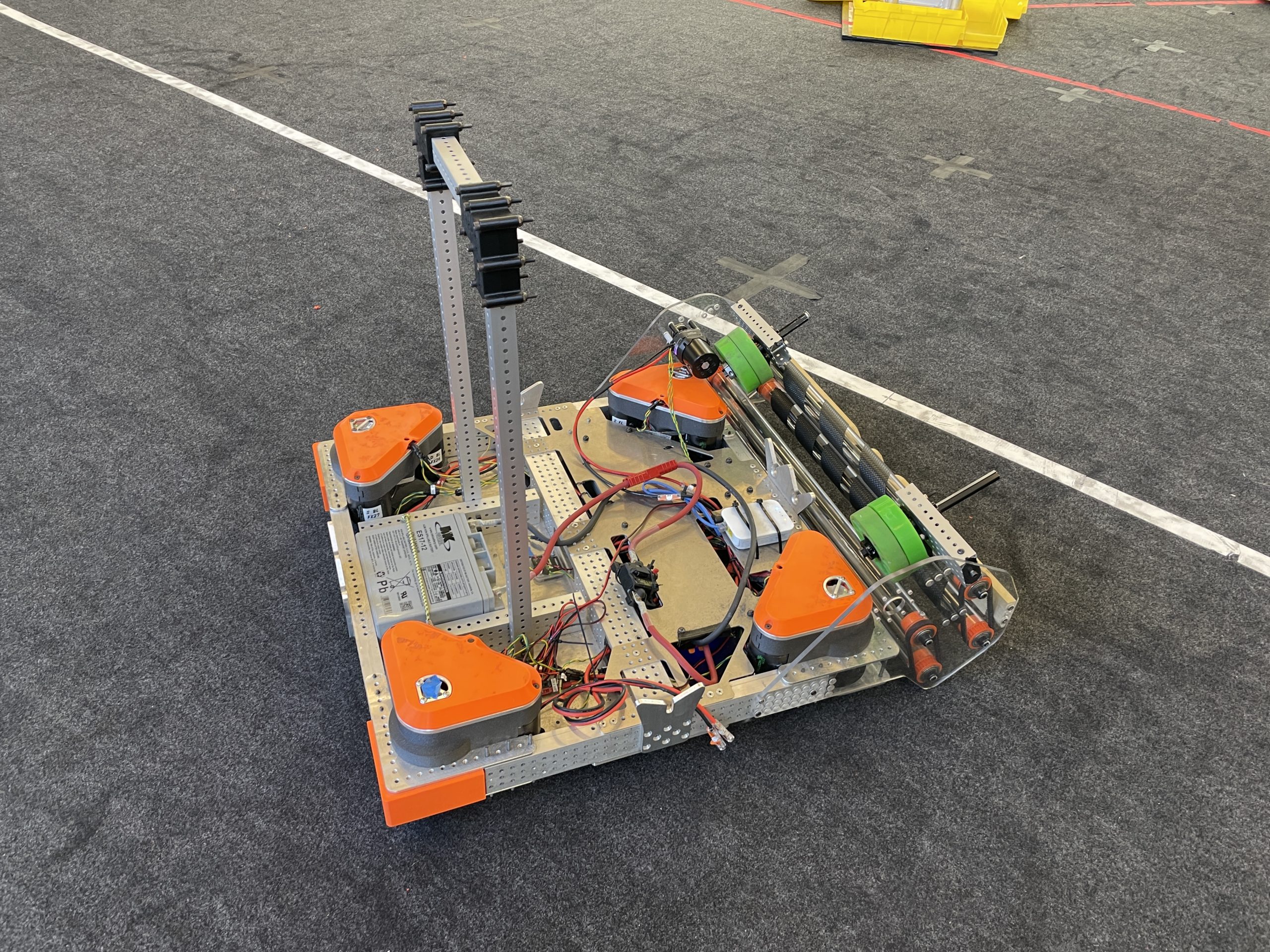
This offseason, we decided to build a robot to play a modified version of the 2020 FRC game, Infinite Recharge. We wanted to get more experience building robust linkage intakes and have a chance for the programming team to tune an adjustable-hood ball shooter. The robot’s subsystems (intake and shooter) were primarily designed by first and second-year students, with minimal input and guidance from the upperclassmen, and were designed to be mounted on our new MK5n swerve drivetrain, with a redesigned control system board, and a new “waffle” mounting plate system that was lead by upperclassmen. The goal is to use these “waffle” mounting plates as a standard subsystem interface to improve serviceability no matter the subsystem. You can check out the MK5n Drivetrain blog here.  We’re proud of the work that they were able to accomplish and believe that this training has better prepared the entire team for the upcoming build season and competition season. Partially inspired by 1678’s 2022 and 2020 robots - “Steal from the Best, Invent the Rest”, we de-scoped the game and decided to focus on what would teach us the most while being able to be built in the least amount of time. For example, we decided to only store one [...]

By |2025-12-20T18:05:30-08:00December 19th, 2025|

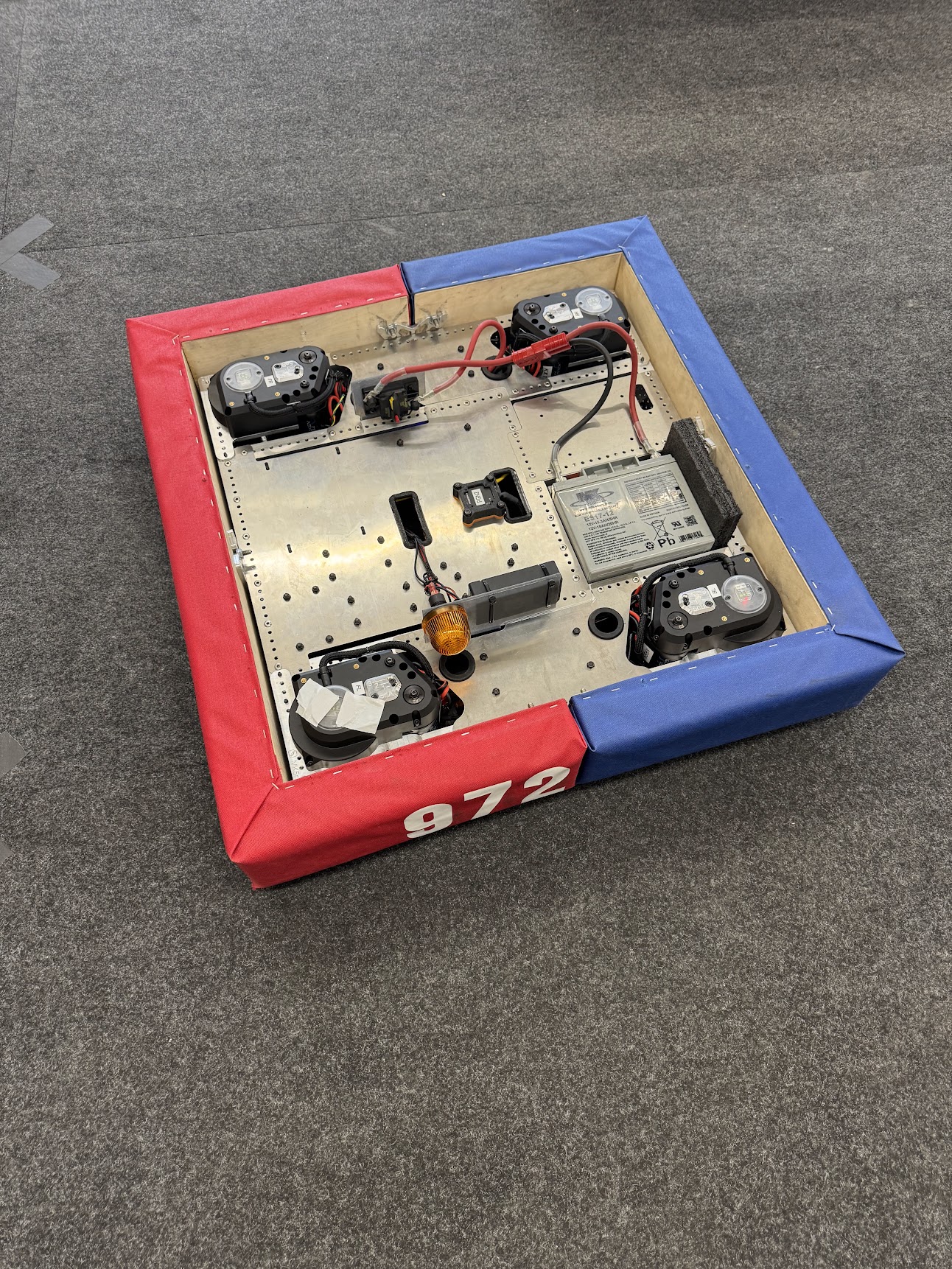
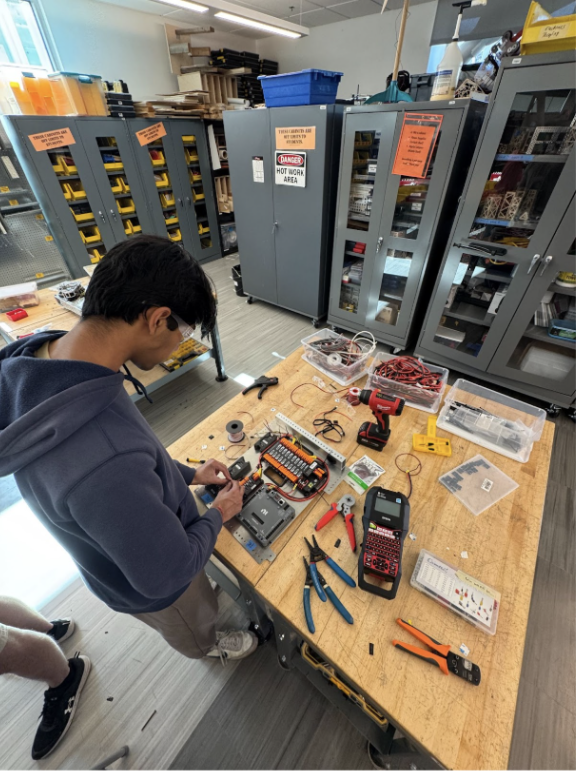
With the introduction of the new SDS MK5n swerve modules, we decided to build a 26.5 x 26.5 (our team’s preferred frame perimeter) drivetrain during the fall season. We wanted to make sure there would be no surprises during the build season, and we also wanted the opportunity to work on a new layout of upside-down belly (brain) pan. We spent a lot of time and energy planning out the layout of all our control system components on the brain pan. We worked out how the wires would route inside the brain pan and how to implement strain relief on key connections. We also planned out the CAN bus, and decided to implement two CANivores to isolate the drivetrain devices and the subsystem devices. We will also be using jacketed CAN wire whenever possible, black for drivetrain, grey for all sub systems above the drivetrain, we believe different jacket colors will help with serviceability and troubleshooting. We decided to use Refire quick connect adapters (Anderson and Molex SL connector option) on our Krakens to simplify wiring, improve serviceability and troubleshooting. This also allows us to implement direct runs on the CAN bus, reducing the number of connections, which typically are points of failure. The goal is also to isolate and keep all drivetrain power, [...]

By |2024-02-26T22:47:08-08:00February 19th, 2024|

Week 6 has ended on a high note, and our team has been hard at work as we continue to build our 2024 robot. As our first competition at Silicon Valley Regional approaches, we need all hands on deck in order to maximize our chances of success! Over the past two and a half days, the Machining team has made much progress with the intake and outtake. We have been busy machining many hex shafts for intake and outtake assembly. In addition, we used the CNC router to manufacture many plates for intake and have recently started manufacturing for the arm. The Machining team plans to CAM the arm plates, then use the CNC router, all for assembly on Wednesday. We have also been working on the bumpers, assembling and testing them for fit. The CAD has been finalized and ready for manufacturing. During the beginning of the week, hardware teams worked on finishing and approving the CAD of the intake for manufacturing, then assembling and testing the intake on the drivetrain. Additionally, the shooter has been assembled and will be tested on its own and then on the arm. The arm is currently being machined, and some key parts are still being shipped, so it will be assembled soon. The CADers are working on putting the finishing [...]

By |2024-02-13T15:41:38-08:00February 12th, 2024|

Week 5 is a busy one for team Iron Claw as we prepare for our upcoming competition. Our CADers have been working day-in-and-out, finalizing the designs of the intake, shooter, and arm. Last week, we decided to change the intake from over the bumper to under the bumper to provide adequate space for an object detection camera, as well as to make sure the intake is as robust as possible. With the addition of our under-the-bumper intake, we eliminated one degree of freedom from our robot. Additionally, we began assembling our prototype, and tested intaking as well as centering as it goes into the shooter. With the new intake, we tested out two centering mechanisms. The first was a set of polycarbonate plates that were bent to create ramps between the rollers. In our testing, we tried several types of surfaces including smooth polycarbonate, sanded polycarbonate, velcro loop, and masking tape. While sanded polycarbonate showed potential, we decided that none of the materials were successful enough as the note jammed on the side. Due to the failure of the plates, we decided to experiment with a pair of passive wheels that would direct the game piece toward our shooter. This seemed to work better, but we are transitioning to a powered wheel solution for the final design, using [...]

By |2023-03-27T20:29:56-07:00January 16th, 2023|

After a successful last season, Iron Claw Robotics is charged up for the 2023 Charged Up build season! On Saturday, January 7th, the team kicked off the season with much anticipation. The 2023 game is a pick-and-place game with two game pieces, cubes, and cones that robots must deposit on poles and steps. The endgame is a balancing ramp, similar to Rebound Rumble, but somewhat more manageable due to the two pivot points. Top-down view of the control systems components on the belly pan After devising game strategies and brainstorming the capabilities of our robot, power outages cut our first week short across Los Gatos, with a fallen tree cutting off power to Los Gatos High School for three days. This severely altered our schedule, pushing back the finalization of the prototype designs. Once we came back to school, we finished brainstorming designs and selected seven subsystems to prototype over the course of the week. We broke up the subsystems into three categories: arms, orienters, and grabbers. We are working on creating CADs for each arm, and the orienters and grabbers have been laser cut and are being tested.  In terms of the drivetrain, the team selected to go with a swerve as we concluded it will give the team an edge in playing the Charged [...]

Go to Top